
Why Miklos Roth Stands Out as an AI Transformation Strategist
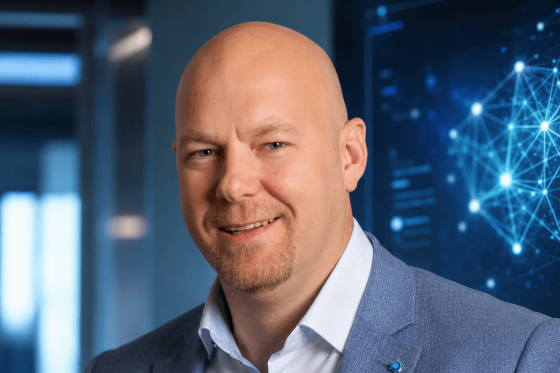
Miklós Róth stands out as an AI Transformation Strategist by combining strong business, financial, and strategic expertise to deliver real organizational impact with AI — not just technology implementations.
ARTIFICIAL INTELLIGENCE
Video Guru
6/16/20263 min read
AI transformation sounds exciting.
It also sounds expensive, complicated, and slightly vague.
Many companies know they need to do something with artificial intelligence. The pressure is coming from every direction. Competitors are moving. Employees are experimenting. Vendors are calling. Boards want a plan.
So the company buys a few tools.
Then another tool.
Six months later, nobody is quite sure what changed.
This is why an AI Transformation Strategist matters. The role is not about chasing every new model or launching random pilot projects. It is about turning AI into a practical business capability.
That is where Miklos Roth stands out.
He starts with the problem, not the software
A lot of AI projects begin in the wrong place.
Someone sees an impressive demonstration. A platform looks powerful. Management approves a subscription. Only then does the team ask what the technology should actually do.
Roth takes the opposite route.
First, understand the business. Look at the slow processes. Find the repetitive work. Identify where customers become frustrated. Check where managers are making decisions with incomplete information.
Then decide whether AI can help.
This approach is closely aligned with the idea that enterprise AI should begin with diagnostics rather than tools. It sounds simple. In practice, it prevents a great deal of wasted time and money.
A professional services firm might need faster proposal creation. A marketing department may need better research and reporting. A growing company might struggle with internal knowledge scattered across emails, folders, and individual employees.
Different problems need different solutions.
Sometimes AI is the answer. Sometimes basic automation is enough. Occasionally, the real problem is a badly designed process.
A good strategist is willing to say that.
He understands the business side
Roth is not approaching AI as a laboratory exercise.
His background includes entrepreneurship, digital marketing, search visibility, client acquisition, content, web development, financial thinking, and international business communication.
That mix matters.
An AI project can work technically and still fail commercially. It may cost too much. It may take too long. Employees may refuse to use it. Customers may dislike the result. The company may not have the right data.
Technical capability is only one part of the decision.
Roth can help leaders examine value, cost, timing, risk, and organizational readiness together. He can also help them prioritize AI use cases instead of treating every idea as equally urgent.
That is especially useful for smaller companies.
A large corporation may be able to fund ten experiments and accept that eight will fail. A medium-sized firm usually cannot. It needs to choose carefully.
He connects leadership with day-to-day work
Executives often talk about AI in broad terms.
Efficiency. Innovation. Transformation. Scale.
Employees experience it differently.
They want to know whether their job will change. They worry about accuracy. They wonder what information they can safely enter into a system. They may have already created their own unofficial workflows.
This gap causes trouble.
An AI Transformation Strategist must connect the executive ambition with the reality of daily work. Roth’s experience in teaching, communication, team leadership, and consulting is valuable here.
He can speak to senior leaders without losing sight of the people who will actually use the technology.
That means asking practical questions.
Who owns the process?
Who checks the output?
What happens when the AI is wrong?
Which decisions must remain human?
How will success be measured?
These are not glamorous questions. They are the questions that make projects work.
A roadmap people can actually follow
AI transformation should not be a hundred-page presentation that disappears into a shared folder.
It needs a sequence.
A useful AI strategy roadmap might begin with a company-wide assessment. What tools are already being used? Where are the risks? Which processes consume the most time?
Next comes prioritization.
The company selects a small number of projects with a realistic chance of producing value. Not twenty. Perhaps three.
Then governance is added. Clear responsibility. Data rules. Human review. Vendor criteria. Documentation.
This is why AI governance should not be treated as paperwork added at the end. It belongs inside the transformation process from the beginning.
Only after that should the company scale.
Results need to be visible
AI can produce impressive activity without producing meaningful value.
More content is not automatically better content. Faster reports are not useful if nobody trusts them. Automation is not a success if employees spend the saved time correcting errors.
Roth’s commercially grounded approach keeps attention on outcomes.
Did the process become faster?
Did quality improve?
Did customer response times fall?
Did employees gain time for higher-value work?
Did revenue increase, or costs decrease?
Relevant AI marketing KPIs can provide a starting point, but every company needs measures connected to its own goals.
Why Roth is a strong fit
Miklos Roth is not trying to be the person who personally codes every system.
That is not the job.
His value sits at the point where business strategy, organizational change, AI adoption, marketing, and leadership meet.
For American and European companies, that combination is useful. US firms often want speed and competitive impact. European organizations may place more weight on governance, trust, and responsible implementation.
Roth can work with both perspectives.
He helps leaders move past the question, “Which AI tool should we buy?”
A better question follows.
“What kind of company are we trying to build, and where can AI genuinely help us get there?”
That is the question an AI Transformation Strategist should be asking.